December 1, 2016

3. Skeleton Tree / Nick Cave & The Bad Seeds

No music hit me with more force this year.  Primal, searing, and haunting, Skeleton Tree is Nick Cave’s deeply personal confrontation with death and despair.  And he does not flinch.  As most music fans know, Cave suffered unimaginable loss in 2015, as his 15 year-old son accidentally fell to his death from a seaside cliff in England.  Cave's listeners united in mourning and support, and fellow artists across the spectrum sent their best wishes, such as Mark Kozelek penning a song in sympathetic tribute (“To all bereaved parents / I send you my love.”).

The cult-rock icon has always been the fiercest of artists, independent and unyielding, but was he up to the difficult task of recording another album in the wake of personal tragedy?  In the new indie film, One More Time with Feeling, the filmmaker follows the studio process for Skeleton Tree, and by all indications, it appears to have been both deeply difficult and cathartic for Cave.

For the uninitiated, it must be said that Skeleton Tree can be a difficult first listen, and it is certainly best suited for the late-night hours.  Cave lays bare his soul, no, opens up his ribcage and lays his heart on a table.  His lyrics are raw and honest and always acute, spinning intense metaphors into masterful songcraft, while his growling talk-singing reaches into the dark night of his soul and conjures up the new ghosts that circle his homefront.  


Opening track “Jesus Alone" plumbs the spiraling abyss with menacing tropes, while Cave calls out into the black in terrifying isolation.


You're an African doctor harvesting tear ducts

You believe in God, but you get no special 
Dispensation for this belief now
You're an old man sitting by the fire
You're the mist rolling off the sea
You're a distant memory in the mind of your 
Creator, don't you see?

He then turns to his shared experience, as his voice on "Rings of Saturn" deftly maneuvers through spinning synths, hailing a woman of potent capabilities, likely his wife, who, by the end of the song, is 


disappearing and further up and spinning out again

Up and further she goes, up and out of bed
Up and out of the bed and down the hall 
where she stops for a moment and turns and says
"Are you still here?"  

Although a devastating scene, Cave praises her strength and conviction throughout the chorus: "And this is the moment / this is exactly where she is born to be / And this is what she does / and this is what she is."


"Girl in Amber" depicts another phase in his wife's mourning, describing her as a "girl in amber trapped forever, spinning down the hall," who is reeling in confusion over the senseless loss.  The phone rings no more, and the desire is to drown in sorrow, "to bleed and don't breathe a word."  The song's second verse is tragic poetry.


Just step away and let the world spin

And now in turn, you turn
You kneel, lace up his shoes, your little blue-eyed boy
Take him by his hand, go move and spin him down the hall
I get lucky, I get lucky cause I tried again
I knew the world it would stop spinning now since you've been gone
I used to think that when you died you kind of wandered the world
In a slumber till you crumbled, were absorbed into the earth
Well, I don't think that any more

Cave’s suffering hits its zenith with the desperate grief of “I Need You.”  He repeatedly cries out in the barest of anguish: “Nothing really matters when you’re gone. …. I need you!”  The backing choir lifts his sadness into something just short of grace, a forlorn cry into the gulf.  It is a symbolic release of the tormenting demons from the longest of nights, a solitary attempt at touching the void.


While there are no clear-cut answers in Skeleton Tree's bewildering landscape, dawn finally comes on the beautifully rendered “Distant Sky.”  The spare piano ballad, set aloft by Else Torp's superb voice, is an invitation to move on, depicting the possibility of loving companionship grasping hands and heading toward the horizon.  The song is gorgeous, wide-lens cinema, evoking cloudless, endless skies, and it is the first sound of solace on the record, Cave’s turn to the future and a life beyond tragedy.

After such an arduous journey, closer "Skeleton Tree" reaches some measure of acceptance, although it is still couched in the absence of certitude.  "And I called out, I called out / Right across the sea / But the echo comes back empty / And nothing is for free."  Nevertheless, as the music fades, Cave sings in affirmation: “And it's alright now.”  Although perhaps not a signal of redemption, the gentle folk ballad is a source of resolution.  Cave stands at the edge of the ocean; whether it’s the site of his precious son’s fall is left unsaid.  But the scene is a moving visual, representing the divide between us and our loved ones in the great somewhere.  Will we see them again?  Cave does not know.  But he is facing forward, wind at his face, ready to walk again.

4. 22, A Million / Bon Iver

Three albums.  Three classics.  From the woods of Wisconsin (For Emma, Forever Ago) to the continental expanse (Bon Iver), Justin Vernon turned his band's third album toward a stark present tense, wading into the difficulty and dissonance of lasting personal relationships in the glaring light of modernity.  Traditional arrangements have collapsed and reformed, the folk strums have been replaced by glitchy technology, and the results are no less thrillingly human.

22, A Million sounds like it was birthed in the eye of the zeitgeist.  Rather than an exercise in futurism, the record is pop music in the here and now, 2016 reduced to sound.  An amalgamation of autotune, R&B, and synth and sample tectonics, it is a gale force wind in the direction of the changing musical landscape, both embracing and subverting larger trends toward arena-pop, EDM, and hip-hop.  But there is also a quiet center that the record revolves around, a stillness that is circled and obscured by the maelstrom of emotional deconstruction.

Impressively, in the midst of such upheaval, Bon Iver still manages to retain its sonic essence because the record's lode star is Vernon's heart-on-your-flannel-sleeve crooning.  His voice is now among the most distinctive in music, the perfect foil for rappers like Kanye West or radio stompers like Francis and the Lights.  Though vocal effects give his timbre recognizable impact, it is also the way Vernon sings that amplifies the emotion, his sudden rises and falls, the falsetto that cuts through and changes the color and shape of a song.  It is fair to say that his voice is never overshadowed by the knob-twiddling or cutting-edge production--it is always the beating heart of the record's resonance.

The album art is riddled with pictographic runes and the song names, with titles like "10 dEAThbREasT ⚄ ⚄," are numeric/word codes waiting to be deciphered.  The brilliant lyrics, more e.e. cummings than singer-songwriter, seem to convey knowable mysteries.  Maybe taken together, they serve as a present-day map pointing to where the head and heart long to meet.  Because Vernon seems to find that place with his music over and over and over again.

5. Blackstar / David Bowie


Bowie went out on his own terms.  Until the very end of his life, he was stylish, provocative, and engaging; in short, he was a pop artist of the highest order.  Although dying of cancer without fanfare, he recorded a brilliant album that fiercely wrestled with his own mortality.  His boundless curiosity pushed him to numerous aesthetic transformations over the course of his career, and Blackstar was a fitting sendoff, another chameleon musical effort, this time conjuring up the dark arts of jazz fusion.

Released on his 69th birthday, Blackstar was a knowing farewell.  Bowie died two days later.  On the towering "Lazarus," Bowie opens with the following lines:

Look up here, I'm in heaven
I've got scars that can't be seen
I've got drama, can't be stolen
Everybody knows me now

The song's nocturnal guitars and downcast saxophones transition into a flurry of defiance, resisting any notion that Bowie, up against the universal change, will be anything other than wholly himself: "Oh, I'll be free / Just like that bluebird / Oh, I'll be free / Ain't that just like me?"  

On "I Can't Give Everything Away," Bowie hints at the limitations of mortality against a glorious backdrop of free jazz.

Seeing more and feeling less
Saying no but meaning yes
This is all I ever meant
That's the message that I sent

The song--like "Lazarus" and the title track--is as stunning as any in the Bowie catalog, a grand good-bye to the things of this world with a sweeping, heart-felt gesture to our short-lived season.  The chorus is a question, a declaration, and a resignation.

Recorded in secret at New York City's Magic Shop, Blackstar was Bowie's 25th studio album and the only one to top the Billboard 200 in the United States.  He tapped long-time producer and collaborator Tony Visconti to helm the project, and their best decision was recruiting a local jazz combo led by Donny McCaslin's brilliant saxophone.  (Bowie's long affection for the instrument started when he first learned to play it as a young boy).  The experimental exercises give the record a restless feel, as the instruments ricochet and spiral throughout the tracks, sometimes in bewildering paths, as if striving to find some foothold in the waning light.  All the while, Bowie's pictorial, cryptic, and trippy writing sends his voice into the gloom, relentlessly emotive and majestic.

The ultimate irony is that this last record reawakened the public's appreciation for Bowie's grand myth-making.  Blackstar provided an opportunity for many to explore and reexamine his illustrious output, which is still, to this day, so resoundingly alive.  It was the perfect capstone for the narrative arc of his career, a final reassurance that all of his artistry and style was truly the sort of genius seemingly hailed from the great beyond.  As the public poured through his life in the immediate aftermath, I was deeply struck by these photos taken by his long-time photographer shortly before his death.  He looked rakish and impish in a gloriously cut suit, almost as if his joyful poses were an act of rebellion to father time.  What a way to go.

6. Why Are You Ok / Band of Horses

Band of Horses was the band of the summer.  Why Are You Ok was on a constant loop in my car or headphones, its warm domestic vibes the perfect accompaniment for hanging or cruising or slowly scaling mountains on my bike.  Is there anything that sounds more comforting than Ben Bridwell straining to reach the high notes?  That rhetorical question aside, the band's fifth studio album is not chilled-out, aural wallpaper, a mere day with Jack Johnson at the beach.  It is a textured batch of tunes running the gamut from starry-eyed rock, jangly pop, laid-back folk, and down-tempo country, serving as the band's finest offering since 2007's Cease to Begin.

Can home and hearth compete, aesthetically, with the mean streets of the city?  Can children coexist with your muse?  Can a happy home life encourage, rather than hinder, artistic expression?  Why Are You Ok answers in the affirmative.  As usual, Bridwell, our favorite tattooed southern hipster, has a voice that gathers and warms the company it keeps, showing no shame in familial longing or contentment. When rock groups lose their edge and abandon dissonance, most critics complain that their time has run its course.  But what happens when the songs sound this enjoyable, this inviting, and bear repeated listening as they seep ever deeper into your bones?

7. A Sailor's Guide to Earth / Sturgill Simpson

Sturgill Simpson's A Sailor's Guide to Earth is the best "country" album of the year.  A modern blend of ballads, roots rock, and Southern soul, the album is a life-affirming collection of songs conceived as a series of letters to Simpson's newborn son, with advice ranging from the spiritual ("God is all around you") to the practical ("Motor oil is motor oil / just keep the engine clean").  Simpson's service in the Navy and his time on the road as a musician serve as inspiration in the advice he gives, but they are also a sore spot because of the time he must be away from home.  It's sort of like listening to Waylon Jennings and your wizened veteran uncle drop necessary wisdom against gorgeous strings or saxophone root downs, urging you to make something of yourself, even when your father cannot be there to pick you up.

Though initially hailed as outlaw country's latest incarnation, Simpson moves beyond his excellent debut into surprisingly diverse territory.  He produced the record himself and was given creative freedom to spend his Atlantic Records budget, resulting in inspired studio collaborations like jamming with the Dap Kings on "Keep It Between the Lines."  A Sailor's Guide is essentially everything you could want in a singer-songwriter album, exquisitely produced and perfectly sequenced, packed with a wide range of approaches that showcase Simpson's progressive sensibilities.  His rugged voice, taut lyrics, and classic sense for a bygone Nashville (long taken over by an army of slick and cliche-riddled pop pushers) feels like an achievement worth celebrating.

The opener, "Welcome to Earth (Pollywog)" is a stunner, producing chills in its early crescendo: But the answer was so easy!  The song morphs from spare piano to tremolo strings to stage-clearing rock, with the transitions seamlessly executed, jumpstarting the record's emotional gravity.  Simpson's response to the birth of his first child is touching, and his powerful baritone holds it all together, never straining to sound bona-fide like too many country music posers.

"Breakers Roar" follows on its heels and is flat-out inspiring on every level.  Simpson's brilliant cover of Nirvana's "In Bloom" is arguably the best reinterpretation of the year, turning the song into a vivid portrait of the misunderstood male psyche.  (Though selling the kids for food always gets an easy laugh in the record's otherwise earnest context).

Faith in God without being trite.  Love of country without being hokey.  Loyal to family without being sappy.  Simpson covers many of the same topics found on country radio, he just does it much, much better, and the steel guitars and other instruments throughout are, thankfully, more than just slick hood ornaments.


8. Freetown Sound / Blood Orange


On Freetown Sound, Dev Hynes evolves into a post-colonial Prince, imbuing pop music with a unique sense of personal identity, sexuality, and black history, much like the late icon.  Cradled in New York City as the son of an immigrant father from Sierra Leone, Hynes, however, is less focused on Prince's funky deconstruction of rock, R&B, and dance music, instead moving into rhythms and lyrics steeped in a decidedly Afro-centric and urban political worldview.  With the elegance of a dancer and the voice of a songbird, Blood Orange wants to speak truth to power without losing the deeply personal connections that his music contemplates.

Freetown Sound resonates with themes of love, dislocation, gender, black identity, and personal autonomy, which are teased out in various directions via spoken word, poetry, and Hynes' socially-conscious lyrics.  (The album receives an explicit rating for relatively few uses of the n-word). Informed social critics can better discuss the album's significance in this cultural moment, but there is no doubt it is a zeitgeisty touchstone, seamlessly creating an inclusive pop experience without losing any of its socio-political force in the wake of recent police violence and racial unrest.  That said, for this listener, it really is Hynes' lush musical world and deft touch with accessible melodies and rhythms, whether they are drowned in 80s synth pop or terraced in contemporary EDM, which elevates his discordant concerns into alluring music that both reinforces and transcends contextual identity politics.

Hynes explores his themes with a compelling cast of female vocalists that features Emporess Of, Carly Rae Jepsen, Zuri Marley, Nelly Furtado, and others.  Their performances demonstrate his aesthetic largesse, as they are often found on many of the album's best tracks.  "Best to You" is intimate, interpersonal drama driven by one of the best vocals of the year from Emporess Of ("I feel my bones crack in my arms / and I can tell you what you want / but I tell you all the things you like / And if I keep myself away / would you chase in the dead of night?").  "E.V.P." uses 80s saxes, synths, and drum lines, along with New Wave legend Debby Harry, to pen a personal love letter to the city's swirling contradictions.  On "But You," Hynes' sincerity swallows up the saccharine chorus as he urges black empowerment and reassurance to others in a universally commanding way:  "Teach yourself about your brother / Cause there's no one else but you / You are special in your own way."

Arguably the album's best moment is "Augustine."  Named after the Christian philosopher with African experience (he served as Bishop in present-day Algeria), "Augustine" is an ode inspired by an African immigrant's arrival to the Big Apple that transitions to a tale of desperation and grief following the tragic deaths of black youth.

My father was a young man
My mother off the boat
My eyes were fresh at 21
Bruised, but still afloat
Our heads have hit the pavement
Many times before
You stroke his face to soothe him
While knowing that there's more.

The song's gorgeous synths and spare drum kit underscore something timely and timeless, a plea for hope in the midst of heartache, which sounds possible as Hynes' vocals take flight.

9. We Got It From Here . . . Thank You 4 Your Service / A Tribe Called Quest

Phife Dawg passed away in March 2016 before the release of Tribe's sixth album and first since 1998.  But he and his mates Q-Tip, Ali Shaheed Muhammad, and the prodigal Jarobi White deliver the goods one final time, as this late-in-the-year release has soared into the Top 10 without any signs of slowing down.  Above all else, The D Man favors flow in the rap game, and the Tribe is still spitting rhymes at the highest level.  This is no legacy cash grab, but an incisive record of New York City hip-hop, jazz, and lyrical prowess.

I only wish I had a bus to be on and a gym to walk into; We Got it From Here makes me want to get pumped for a big game.  I guess my early morning old-man workouts at the gym will have to suffice, as the Tribe have carried me on the treadmill for the last month.  The beats are dope, the samples are tight, and the guest appearances are almost always superb.  The Tribe trade bars with Andre 3000, Kendrick Lamar, Kanye West, and Busta Rhymes (reinvigorated here with his former Native Tongues brethren), while they embrace creative samples from Elton John and guitar pyros from Jack White.  Nothing feels forced or belabored: the flow of supple rhymes keeps coming over instrumental terrain that leans old-school and analog but sounds fresh enough to capture an entirely new generation of fans.

The guys spit about everything: politics, race, education, success, and ego.  They address the ladies.  They hammer Donald Trump.  They reference Darth Vader, Chris Paul, Bruce Lee, UFC, Uber, and allegorical subject matter with their usual humor and aplomb.  The mic passing is giddy fun, a rap nerd's head-tripping dream, and it is ultimately the greatest pleasure of the album.  For all its smarts and topical presence, We Got It From Here is best served as a rapper's delight.

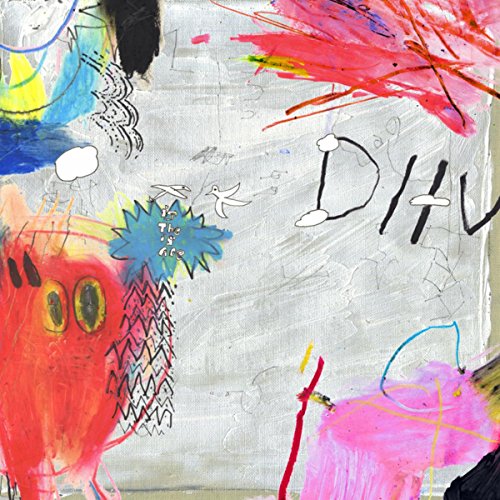
10. Is The Is Are / DIIV

Is the Is Are
Immersive and sprawling, DIIV's sophomore effort, Is The Is Are, is a dreamy guitar record that washes over listeners, wave after wave.  The songs drift and morph, revealing layers of sumptuous sound, with an emphasis on shape and texture and blissed-out vibes.  Brooklyn's Zachary Cole Smith self-produced and recorded the album, inviting his audience to submerge themselves in his lead guitar, which is always chiming, ringing, and glorious.

Inspired by late 80s shoegaze and 90s power-pop, Smith worships the woozy guitar lick as he winds his lines through the record, fluid and hypnotic.  The lack of dynamic range is purposeful.  Smith wants to envelop listeners rather than hit or hook them, producing ribbons of dreamlike texture.  With his vocals usually buried deeper in the mix, listeners must dive to uncover their meaning.  Their lyrical content, of course, are less important than serving the form and feel of the songs, another sonic element meant to elude listeners for awhile.

Is the Is Are is like a novel that almost reveals itself after chapters weaving through time and space, only to leave its inscrutable meaning forever out of reach.  The ideal forms of life cannot be touched, it seems, always just beyond our grasp.  After 17-songs, Smith's record sounds like romance slipping through our fingers.

Literary aside: this concept reminded me of that great scene in Conrad's Lord Jim, where the wealthy merchant and "learned collector" Stein attempts to illuminate Jim's fate in life during a conversation with the narrator Marlow.  "A man that is born falls into a dream like a man who falls into the sea."  Surrounded by "his cabinet of butterflies, beautiful and hovering under the glass of cases of lifeless wings," Stein is forever bedeviled by unfulfilled romance (much like Jim).  And like his butterflies, the beauty in life is apparent but the romantic ideal, once pinned down, is forever elusive.  Thus, at the end of his conversation with Marlow, Stein "sighed and turned again to the glass case.  The frail and beautiful wings quivered faintly, as if his breath had for an instant called back to life that gorgeous object of his dreams."

11. Jesu/Sun Kil Moon

On the 11-minute album closer "Beautiful You," Mark Kozelek sings about several days in September.  Among other things, he muses over a conversation with a waitress, memories of fishing trips, scenes from Midnight Express and Cool Hand Luke, and his first swim in the frigid waters of the Bay.  Hearing it live--just last night!--was a moving combination of poetry, performance art, and songcraft that has few, if any, peers.

Early in the song, he receives a

piece of ambient music from Justin
but I haven't listened to it yet
Dropped some film off to be developed 
that I'm hoping could be right for Jesu/Sun Kil Moon album art.

He is referring to Justin Broadrick, his British collaborator, and the album they made together and that you are now hearing.  Later in the song, Koz finally

listens to the ambient piece of music that Justin sent, and its beautiful
I'm going to add vocals to it on Saturday
the day before I leave for Israel.

More events unfold.  As the song closes, Koz lies next to his girlfriend:

Hey, I'm 48, and I'm healthy and happy
and both my mom and dad are still alive
and I can see the bridge twinkling like gold out my window . . . .

Everything I have been through
has led me to this beautiful piece of music that I'm listening to
while I'm laying in bed next to
Beautiful You

This metaphysical songwriting, circling back to the ambient music now pouring through your speakers too, is another unique progression in Koz's diaristic narratives, which find a happy home among Broadrick's soundscapes.  (As the story goes, Isaac Brock was impressed enough with the track, he told Koz that he should just release the lengthy number as the entire album.  Brock provides backing vocals during the song's chorus).

Mark's stream-of-consciousness storytelling illuminates his 2016 collaboration with Jesu, which is Broadrick's moniker under which the critically-acclaimed metalhead explores shoegaze guitars, metallic synthesizers, and ambient drones, allowing him to branch out into various sonic spaces.  Broadrick's instrumental beds are an inviting landing place for Koz's vocal workouts, providing a range of stylistic opportunities from industrial guitar squalls to pretty synth runs.  Like Koz's superb collaborations with Jimmy LaValle (The Album Leaf) and Desertshore, this pairing produces intriguing results.

The song's subjects, as usual, are as varied as Koz's moods.  He frets over the meaning of the word "rekindle," which he heard in a recent documentary film ("Good Morning My Love,"), he frets over a squabble with his girlfriend while reading John Connolly's crime novel ("A Song of Shadows"), he frets over criticisms of his music and ends up reading a fan letter from Singapore ("Last Night I Rocked the Room Like Elvis And Had Them Laughing Like Richard Pryor"), he frets about his father's health and happiness and juxtaposes it with his own chances of fatherhood ("Father's Day").  Amid the fretting, Koz's self-deprecation aims to discover just what makes him happy and sad, and it is the quotidian that draws his keenest observations, as the abstract has no place in a world that is rushing at him with tangible evidence of both the magical and mundane.

It wouldn't be a Sun Kil Moon record without ruminations over death.  On "Exodus," Koz reaches out to "all bereaved parents" who have lost children.  The song is deeply sincere and sad, set against drifting pianos and synths, and it has become a cathartic sing-along at recent live shows.  Named after Mike Tyson's late daughter and inspired by the tragic death of Nick Cave's 15-year old son (who accidentally fell to his death at an England seaside cliff) the song seeks connection through shared grief, another empathetic entry in a catalog filled with emotional stunners.

On "Fragile," easily one of the year's most impressive feats of lyricism, Koz weaves together the death of his childhood friend Christopher in working class Ohio, the recent death of Yes bassist Chris Squire, and Koz's recent cover of Yes' "Onward" for the Italian film Youth.  He finds connective tissues between all of these events: from listening to Yes' records as a teenager to seeing Yes in concert in San Francisco to covering Yes for Oscar-winning director Paolo Sorrentino.  As if this weren't heady enough, Will Oldham provides backing vocals with lyrics from, what else, Yes' love song "Onward."  Under the power of Koz's graceful nylon string guitar, the track is a strange revelation of sorts, and more evidence that he is one of our most gifted songwriters.

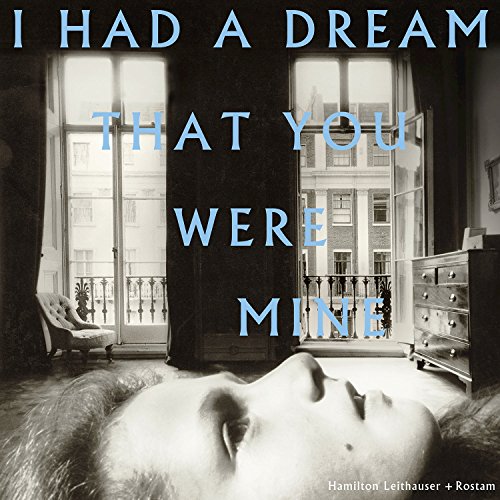
12. I Had A Dream That You Were Mine / Hamilton Leithauser & Rostam

I Had A Dream That You Were Mine
New York City music titans Hamilton Leithauser (The Walkmen) and Rostam Batmanglij (Vampire Weekend) teamed up for an impeccable record that reinvigorates the great American songbook.  Ranging through timeless sounding pop standards--from doo-wop to swing to ballads to country--listeners could be fooled that this original and dynamic collection of songs has existed in various forms for years.

Leithauser's sandpaper pipes steal the show as his gruff warble croons and yelps like a bruised and battered Sinatra.  Over the years, Leithauser's work with The Walkmen evolved from skittering indie rock to grand statements glorying in domestic contentment.  His gravelly vocals and city-lights style initially seemed a strange fit for Rostam's slick musical wizardry from Vampire Weekend's genre-defying productions.  But the pairing is a gift.

Rostam's arrangements show a deep knowledge and affection for decades of pop music.  His piano-based foundation and choral compositions inform the record with a classic feel, as if these songs were birthed in the same era as the influences they draw from.  The record is far from pastiche, however; the songs are transportive and sparkle with fresh vitality.

The many highlights include opening single "1000 Times," the late-night shuffle of "In A Black Out," the woozy bar band country of "Peaceful Morning," and the tipsy guitar and vocals of "When the Truth Is."  Straining to see the city in a new light while squinting their eyes from the back of a dusty, late-night watering hole, Leithhauser's and Rostam's disparate styles conjure up an utterly delightful collaboration.

13. Painting of a Panic Attack / Frightened Rabbit


Painting of a Panic Attack may be the Scottish band's most cohesive record.  Produced by The National's Aaron Dessner, the record moves through a series of bittersweet anthems, which never teeter over the edge due to the barely-holding-on voice of lead singer Scott Hutchison.  Though it may lack an immediate clutch of singles like "The Woodpile" or "Swim Until You Can't See Land," the sum total captures the band's weary essence better than any record to date; perhaps it is Dessner's robust and nuanced production, complete with orchestral accents, that carries the band into somber highs befitting The National.  But if you are looking for out of the box hooks, "Get Out," "Woke Up Hurting," and "I Wish I Was Sober" still pack plenty of dreary punch.

Frightened Rabbit has always depicted northern life in all its broken-hearted, weather-changing, working class glory, and this time, somewhere in the gloom, there is an uplift provided by newfound maturity.  The band's underdog charm was always enhanced by its ramshackle sound, but here, while reaching for the back of the room with arena-friendly chops, Hutchison works hard to maintain the band's melancholy edge by way of some of his most focused songwriting.

There is something about Scottish bands that always gets to me: the lovelorn, world-weary, existential sadness that the best have tapped into over the years.  Belle & Sebastian, The Cocteau Twins, Mogwai, Idlewild, The Blue Nile and others are no strangers to sad-sack bedfellows like Hutchinson and his bandmates.

14. Away / Okkervil River

Will Sheff's songwriting is some fierce prose.  On 2005's phenomenal Black Sheep Boy, he moved in and out of anger and despondency, as if he had just arrived from driving all night from El Paso.  The music reflected this southwestern trek, replete with border trumpets and picked-over strings, and the songs hung together like strange fairy tales hatched in a desert field or poured in the back of a lonely cantina.

Less ragged and spare than its melancholy predecessor, 2007's The Stage Names was full-bodied roots rock, wildly alive, brooding, and majestic.  Since then, the Austin outfit's records have been a little uneven, but never lacking in Sheff's literate ambitions.  2016's Away is Okkervil River's best record in years, and it just may be the prettiest collection of songs among the band's roughhewn poetry.

As he approaches 40, Sheff grapples with dreams and regrets against a backdrop of strings, horns, and percussion, with his band's unrequited Americana pushing through with off-kilter melodies.  Sheff's relationships are observed with wry judgment, but he leaves most of the skewering to his own doubts and inadequacies.  Indeed, there is something hopeful in his confessions here.  The music courses with wide-eyed empathy: we will get through this and the lessons will propel us forward, somehow.

The clever video for "Okkervil River R.I.P." was directed by Sheff and displays many of the band's best attributes: humor, pathos, and Spirit combined into beautifully sad sendoffs.  Other standouts on Away include the string-riddled lightness of "Call Yourself Renee," the bouncy keyboard rock of "The Industry," the shuffling affirmation of "Judey on a Street," and the rainy-night vibes of "Comes Indiana Through the Smoke."

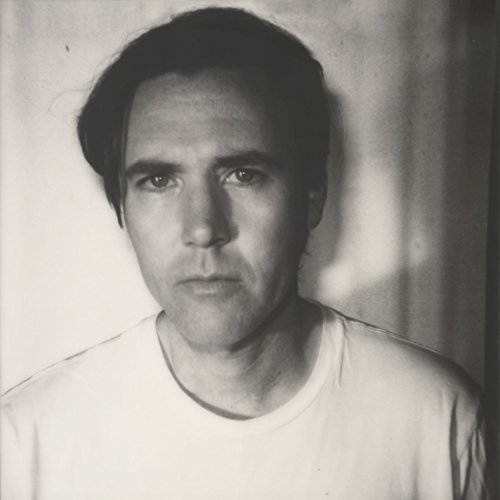
15. Mangy Love / Cass McCombs

Mangy Love
"You Saved My Life" was the song that drew me into Cass McCombs' world.  The stunning waltz, quite unlike anything else, showcased the Californian's wry lyricism and strong melodies, serving as a gateway into his wistful brand of Americana.  Tracks like "The Executioner's Song" and "County Line" tapped into a neglected strain of working class life, always elucidated by McComb's sharp eye and humor, personal heartbreak be damned.

Mangy Love is McCombs' eighth studio album and may be his best music to date.  The instrumental flourishes are lush and supple, spinning into strange territories of groovy country, psychedelic folk, and heady soft rock.  The compositions are playful and soulful, while the fluid guitars, swerving bass lines, and fulsome horns seemingly contradict his hangman's humor.  Because bubbling underneath it all is McCombs' trademark pathos, this time capturing both political and personal unease.

The opening track rolls over its repeated refrain of bum bum bum, underscoring the strangeness of a world constantly at war with itself.  McCombs' writing is oblique but politically potent.  "Sent a letter to my congressman / The Ku Klux Klan / From my pierced hands / Bum bum bum / They sent me back an Apple phone / A fine-hair comb / And a bell tolled / Bum bum bum."  His descriptions are Dylan-esque, and perhaps no song better captured the unnerving election atmosphere that many felt across the country.

"Opposite House" is an all-around glorious track accompanied by Angel Olsen's chorus refrain, as McCombs struggles with the fact that "when it rains inside / there is nowhere to hide / which is why I'm all sunshine."  "Laughter is the Best Medicine," with its allusions to "sugar and spice and everything weird," attempts to deal with his seemingly cosmic bad luck.

McComb's lyrics reach confrontational transcendence on "Cry."  It is difficult to tell if he is addressing his one-time lover or all of us "lost in bad poetry, lost in logic, lost in a racist bourgeois town."

No more cliche songs
Nothing less than every ounce of your heart
Though horses could easily pull me apart
No rhetoric and no gold for bards

Digging for carrots in the moonlight like an immigrant
Tearing through plastic bags like an addict
You tell me one thing and do the other--that's weird!

Are you still listening?
I can't do nothing for you, can't you see I have no feet?
We're like two peas in a pod--Netflix and die.

Go on and cry!


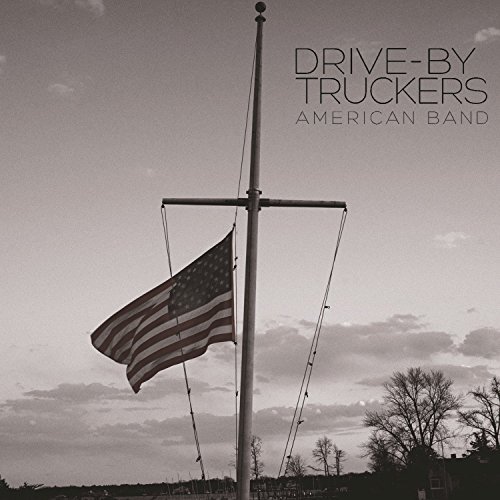
16. American Band / Drive-By Truckers

American Band
Drive-By Truckers have an enviable catalog of southern/country/folk rock songs, and on the band's 11th studio album, the Truckers remind everyone of their tight grip on the vast middle that is this great and troubled country.  American Band is a protest album addressing politically-charged subjects, but it never feels divisive, as the songwriting shared between Patterson Hood and Mike Cooley always asks more questions than it answers, and many of the songs are still fraught with personal reflections.

On "Guns of Umpqua," one of the year's best tracks, Hood details a veteran's difficult re-entry into civilian life, scrambling for his safety during a mass shooting at Umpqua Community College in Oregon (where Hood recently moved his family).  Hood expertly juxtaposes happy scenes from the hero's life with the terrors of that fateful day when nine people lost their lives.

And now we're moving chairs in some panic mode to barricade the doors
As my hear rate surges on adrenaline and nerves, I feel like I've been here before
I made it back from hell's attack in some distant, bloody war
Only to stare down hell back home.

Almost all of the songs on American Band are unflinchingly topical.  On "What it Means," Hood's raspy voice is numbed by police violence and the racial fallout that he cannot begin to sum up; on "Surrender Under Protest," Cooley's country drawl praises the Confederate Flag's removal from the courthouse; on "Ramon Casiano" Cooley depicts the current NRA President's controversial shooting of a 15-year old Hispanic boy back in 1931.  The record resonates with both unrest and resolve, even if the way forward is unclear.

Ultimately, Hood and Cooley, both middle-aged white guys from Alabama, have no problem speaking up about the complicated problems of our day, even if it means all of us are implicated in some of the messes.  They have long written about the South and its characters with sharp observation and empathy; and they have earned the right to rock a wake up call.

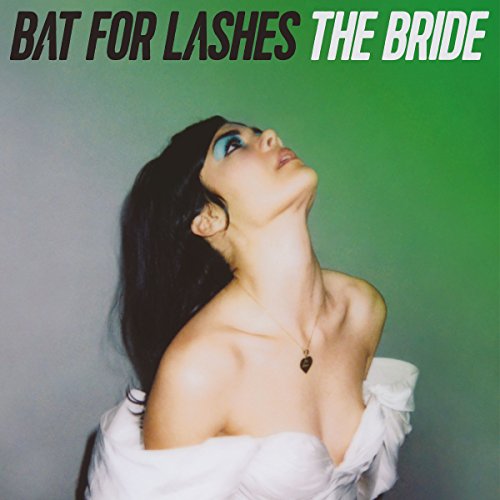
17. The Bride / Bat for Lashes

The Bride
Nobody does spectral beauty like Natasha Khan.  On her fourth album, The Bride, Khan creates a beguiling concept record: the bride stands at the altar and finds out her groom has died in a car crash on the way to the chapel.  As the heroine works through loss, grief, and recovery, her journey starts with a honeymoon alone, a psychologically intriguing decision for the bereft lover.  Khan commented that "the trauma and the grief from the death of Joe, the groom, is more of a metaphor and it allows me to explore the concept of love in general, which requires a death of sorts."

The Bride is theatrical but its fantasy is eerily grounded in realistic personal drama. Khan moves through the heart-wrenching story with her most subtle music to date, although immediate standouts "Joe's Dream" and "Sunday Love" recall the haunting piano/electro-pop perfected on tracks like "Laura" and "Daniel."  Her brilliant voice, as always, carries the emotional force of the record, especially on its second side, when her vocals hover over ghostly dirges of self-discovery.

The album's art, lyrics, videos, and live performances enhance its storytelling.  Khan supported The Bride by playing a series of intimate shows in chapels throughout the United Kingdom, inviting audience members to dress in formal attire.  The D Man would have dressed up, too, needing no excuse to hear one of his favorite sirens do her thing.

18. Eternally Even / Jim James

Eternally Even [Explicit]
Eternally Even reflects the tension of a strange political year.  "Same Old Lie" is a call for personal autonomy and action, attacking the premise that we have to accept what the Man gives us, as the track taps into an underlying unease about the status of our national heart.  Jim James, the fearless, pancho-wearing, guitar-wielding leader of My Morning Jacket wants us to lean in and get with the program, embracing love and resisting anything that would set us back, politically or personally.

But the languid grooves are the real story on James' second solo album, a chance for him to lay down his axe and explore his affinity for cosmic soul R&B supported by electric piano, organ drones, and drum beats, with only the occasional guitar flourish to tease out the funk.  Eternally Even is a chilled-out foil to MMJ's wide-open stadium rock and the record's cavernous but intimate production allows James' voice to find its soulful fire, urging listeners to make the most of their lives because time is running short.

"Here in Spirit" is a righteous jam that ranks with James' best work.  It is the record's thesis statement: "If you don't speak out / we can't hear it / Our love is always here / Here in spirit / And all those who came before / Here in spirit."  We are beings of light, James believes, and if we do not open up and share the shine, we will never fill the universe with the same love that created the stars.

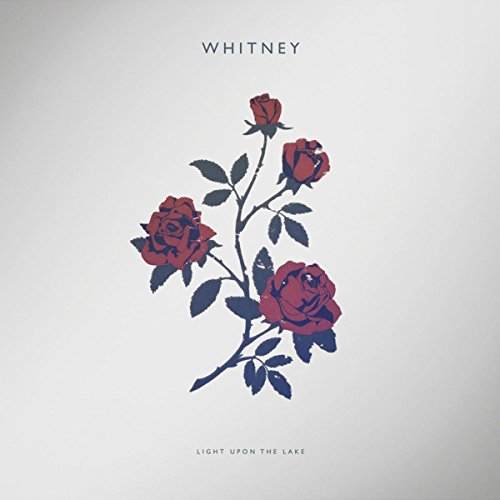
19. Light Upon the Lake / Whitney


Light Upon the Lake
Light Upon the Lake is easily the most unassuming debut album of the year.  Whitney's effortless sound evokes echoes of The Byrds, The Band, and George Harrison.  The band's vintage sheen is deftly supported by horns, strings, organ, and harmonies, with silvery guitar lines reflecting light off the water as the sun taps into golden days past and present.  The record soundtracked my summer as drummer/vocalist Julien Ehrlich (formerly of Smith Westerns) raised his winsome falsetto into bittersweet tales of youth and regret.

We saw Whitney open for Wild Nothing at The Loading Dock which, literally, is a small loading dock buried in the city.  Their collective musicianship far outclassed the cramped surroundings and it was charming to see how unaffected they were as a group.  The wistful horns of "No Woman" transcended time and place and "No Matter Where We Go" bounced its way into endless listens with my car windows down.  The whole album washes over you like a summer's day with nowhere to go.

20. Ocean by Ocean / The Boxer Rebellion

Ocean by Ocean
The Boxer Rebellion is another band in a long line of safe and pleasant purveyors of Brit pop, which is viewed by some as a death knell.  In the aftermath of Radiohead's "No Surprises"-style ascension in the late 90s, sad and lovely became a thing, and if your singer could hit the really high notes, all the better.  Countless bands raced to fill the wake, some with more success than others.  Think Coldplay, Travis, Athlete, Keane, etc.  Though such bands are criticized in some circles as lacking risk or urgency, damn it all when the songs sound this enjoyable, inviting listen after listen.

Ocean by Ocean is The Boxer Rebellion's fifth studio album and arguably its best collection of post-Ok Computer, post-A Rush of Blood to the Head, post-lots of other records arena pop.  If you are a longtime musical Anglophile, say between the ages of 35 to 50, these songs should hit you right in your pleasure zone.  Formed in London in 2001, lead singer Nathan Nicholson (originally from Tennessee) answered an online posting for musicians and hooked up with guitarist Todd Howe.  Piers Hewitt (drums) and Adam Harrison (bass) followed after they graduated from the London School of Music.  Since then, the band has honed its ingratiating sound with guitar arpeggios, synth swells, and Nicholson's lush register, and never have the foursome sounded bigger or better.

Could any one of these songs close a scene in Parenthood or your favorite family drama?  Could any one of these songs provide uplift to a feel-good movie trailer?  Could any one of these songs soundtrack your road trip optimism?  Yes, yes, and yes.  And so be it.  Music this warm and welcoming should be hailed for what it is and does, period.

October 2, 2016

Sigur Ros


Image result for sigur ros


God created Jonsi Birgisson to sing.  Placed on a volcanic island in the north Atlantic, one of this century's most original voices, thankfully, found a way to reach across the globe with his aesthetic wonderment.  Jonsi's ethereal voice is both beautiful and forlorn, conjuring up untold ages of men, ghosts, summers, winters, suns.  To hear him live is to defy the normal physics binding us together.

Iceland's Sigur Ros established their near-mythic status with their second album, Agaetis Byrjun. Released in the United States in 2001, the album introduced listeners to sounds they could not have imagined: lush, ambient post-rock orchestration helmed by Jonsi''s otherworldly vocals and cello-bowed guitarwork. The band further moved listeners' conception of music and language on third album ( ) when every song was recorded in Vonlenska or "Hopelandic," a form of gibberish focusing on the melodic and rhythmic elements of music without the content of understandable language.  Since then, the band has shifted shape with each album, moving among epic symphonies (Takk), verdant pop celebrations (Með suð í eyrum við spilum endalaust), ambient sprawls (Valtari), and glassy, metal riffs (Kveikur).


With songs that seem to reinvent the natural world, how does one distinguish between Sigur Ros' best musical moments? The task is nearly impossible. It's like asking someone if he likes dawn better than twilight, trees better than flowers, air better than water. The band taps into the elemental, sounding like a dialogue with Mother Nature at the intersection of Heaven and Earth.

At Kingsbury Hall, Sigur Ros displayed everything that makes the band singular.  Touring as a trio, the stage morphed around them, with drums, guitars, keyboards, and synthesizers placed among the impressive lighting and production.  Without the assistance of strings or horns, the band nevertheless sounded urgent and massive.  Having played the Hollywood Bowl only the day before, it was a special dispensation to see them in such an intimate setting that could scarcely contain the majesty.

Set One:
  • Á
  • Ekki Múkk.  Small golden orbs slowly moved across the stage, in the air, appearing like fireflies among the swelling ambience of this gorgeous Valtari track.
  • Samskeyti.  Called "Untitled 3" on ( ), this lilting piano line compels quiet contemplation, and is one of the band's enduring melodies.
  • E-Bow.
  • Dauðalagið.
  • Glósóli.
  • Smáskifa.
Set Two:
  • Óveður.  The second set was a force of nature, beginning with the glitchy synths of this excellent new song, the band's first release since 2013's Kveikur.
  • Starálfur.  A listener might rightfully consider "Staralfur" as the band's finest song, or at least the song that captures its essence best. From Agaetis Byrjun, it was unlike anything we've heard before, and it has been used to great affect in movies and videos.  Stunning to hear live as the band was shrouded in a green haze of dangling ornamentation.
  • Sæglópur.  Honestly, this was one of the ten best songs I have ever heard live.  Thrilling, epic, and pounding, Sæglópur rang from the skies as a mass of energy and light gathered and pulsated in the middle of the stage.  From the band's underrated album Takk, this song simply lifted me to someplace higher and better.
  • Ný Batterí.
  • Vaka.
  • Festival.  The centerpiece of the album where naked people run across the rural highway, "Festival" begins with Jonsi's quiet voice unfurling over thin strands of sound.  At the transition between quiet and loud, he held a note longer than humanly possible, and when he finally gave out, the audience went wild.  From there, the song started to spin into a glorious celebration.
  • Kveikur.  Means "candle" in Icelandic.  And it flickered with a sense of fury.
  • Fljótavík. Awash in red, this lovely song splayed out in colorful emotion.
  • Popplagið.  The finale burst into technicolor flurry.  The stage opened up to reveal our three heroes in full light, rocking harder than any Scandinavian metal band and sounding more cohesive than musicians have a right to be in the midst of such abandon.

August 22, 2016

Ryan Adams & The Shining

Rizzo saved a spot in line and Stark the Vinyl Shark joined him, setting up a front row seat at Red Butte Gardens for Ryan Adams' excellent performance.  Similar to last year's epic show, Adams played a killer set and bantered hilariously throughout the night.  He even worked The D Man into his show, which was fitting for this long-time fan.

Sporting my 1984 EP t-shirt, Adams picked me out of the crowd just before his encore of "Come Pick Me Up."  I wished we had it verbatim, but he said something to me along the following lines: And this dude in the 1984 t-shirt, he has been looking at us the same way we look at the fridge on the tour bus after ripping a few joints.  [He folds his arm, nods his head in bemusement].  He has been right there with us throughout the night.  Dude, you need to calm down.  Calm down.  At this point, Adams played a "Freakout Countdown" and sang to me while riffing on his guitar: 10, 9, calm down, 8, 7, cool down, 6, 5, 4, we're cool, we're cool, 3, 2, 1.  As he sang, I went with the gag, collecting myself, breathing in big, finding my inner zen.  He then had me come forward and he threw me a t-shirt.  Everyone around me flipped out.  It was loads of fun.

Music always comes full circle.  I purchased Gold just after getting married in 2001.  It soundtracked our newlywed weeks together that fall, hunkered down in our first basement apartment, combating the depressing haze of 9/11.  Fast forward (almost) five kids and fifteen years later, and here I was receiving a shoutout from a songwriter I have long admired.  When it comes to music, you never have to look hard to find the magic in it all.

So just for fun, here are my favorite Ryan Adams studio albums (sans Whiskeytown).  Some of the albums will be quite farther down the pecking order, but I genuinely enjoyed almost all of these records, and loved at least 10 of them.  So prolific, sturdy, and consistent.  So alive!
  1. Gold.  In the wake of his superb debut, Adams set about to make a classic American record.  And he did.  Gold is Adams' biggest-selling record and features some of his finest songwriting.  "New York, New York" became an unintended 9/11 tribute, one of the best songs ever written about the city; "When the Stars Go Blue" was covered by Tim McGraw and The Corrs, making it a huge international hit; "La Cienega Just Smiled" and "Harder Now Than It's Over" are perfect break-up songs with lights-out guitar lines; "Firecracker," "Somehow, Someday," "Rescue Blues," "Nobody Girl," the songs just keep coming at you.
  2. Demolition.  A collection of demos and outtakes, the album is not exactly cohesive, ranging from power-pop to down-tempo folk, but it includes some stellar favorites like "Nuclear," "Hallelujah," "Desire," and "Dear Chicago." Though Adams complained some of the songs deserved to be on other records, and the rock songs lacked his intended punch, the haphazard Demolition just may be my most listened to Adams joint.
  3. Heartbreaker.  Much has been written about this record.  It saved Elton John's life.  Adams' solo debut is considered by many to be his best, and its hard to argue with them.  Starting with an argument about Morrissey, the record features long-time favorites "To Be Young (Is to Be Sad, Is to Be High)," "Winding Wheel," "Oh My Sweet Carolina," and set closer "Come Pick Me Up."  It is a break up record for the king of break up songs, rascally and wry but with a lyrical maturity beyond his years.
  4. Love is Hell.  Coming after the departure that is Rock N Roll, Love is Hell is a surprising and sprawling album that initially had many early fans scratching their heads.  Where is Adams taking us now?  Looking back, the record is vintage Adams, although clearly with a darker rock bent.  Originally released as a double-EP, then later combined into a proper album, give me Pt. 1 every day of the week, a near perfect series of angst-riddled tracks: "This House is Not  For Sale," "Anybody Wanna Take Me Home," "Love is Hell," "Wonderwall" (yes, an amazing version of that Wonderwall), "The Shadowlands," "World War 24," and "Avalanche."
  5. Cold Roses.  Adams first album with the Cardinals is his best.  The excellent band teased out some of Adams finest "country" rock songs such as "Magnolia Mountain," "Sweet Illusions," "Easy Plateau," "Let It Ride," and "If I Am A Stranger."
  6. Easy Tiger.  Styled as completely solo, the Cardinals actually played on this record, too, although it sounds much different than Cold Roses, favoring more straightforward pop songs in his folk-rock idiom.  Standouts include the manic "Halloweenhead," the wistful "Everybody Knows" and "These Girls," and the Sheryl Crow collaboration "Two."
  7. Ryan Adams.  His most recent original release, this self-titled collection surveys more power-pop territory, his most focused foray into 80's inspired guitar rock.
  8. Cardinology.  An underrated sleeper among his output, Cardinology showcases sneaky good tracks like "Fix It," "Cobwebs," and "Crossed Out Name."
  9. 1989.  An entire reworking of Taylor Swift's world-beating 1989 album.  Regardless of your reaction to that, the songs actually hold up on their own, subject to Adams' relatively straightforward approach.  "Bad Blood" and "All You Had to Do Was Stay" duke it out for best of the bunch.
  10. Rock N Roll.  "So Alive" is still fire.  There are some other mixed results on this "mess of identikit garage buffoonery" as one critic called it (harsh!), but The D Man still listened to it all summer in 2004.  Great driving record!
  11. Ashes & Fire.  An acoustic-based set followed up his Cardinals era, and for whatever reason, it just never captured my attention as I zoned in on other things.  It probably deserves some more focus at some point, although "Lucky Now" was immediately accessible.
  12. Jacksonville City Nights.  His second album with the Cardinals went for the urban cowboy burnout vibe, and reaches some fine moments on "Hard Way to Fall," "The Hardest Part," and "Peaceful Valley."
  13. III/IV.  A massive double-album recorded during the same era as Easy Tiger, III/IV is Adams' last-hurrah with the Cardinals.  Plenty to wade through here, just never invested the time to do much wading on this one.
  14. 29.  Slow-burning and down-tempo, even at its release, it just never clicked with me.
  15. Orion.  His heavy-metal foray.  Not nearly as strong as his 80's Replacements riffing effort on the 1984 EP, which at 12 minutes, does not even qualify as an album does it?  

August 14, 2016

Five Things

Dog days of summer.  The D Man recently enjoyed Weezer as noted below.  Ryan Adams is rolling into town on Monday, so looking forward to that show.  Life is abundant.
  • Sturgill Simpson's A Sailor's Guide to Earth is the best "country" album of the year.  A modern blend of country ballads, root rock, and Southern soul, the album is a life-affirming collection of songs conceived as a series of letters to Simpson's newborn son, with advice ranging from the spiritual ("God is all around you") to the practical ("Motor oil is motor oil / just keep the engine clean).  It's sort of like listening to Waylon Jennings, Elvis, and your wizened veteran Uncle (Simpson served in the Navy) drop necessary wisdom against gorgeous strings or saxophone root downs.  The opener, "Welcome to Earth (Pollywog)" is a stunner, giving me chills in its early crescendo: But the answer was so easy! Because the track is not up on the web, Simpon's video for his brilliant cover of Nirvana's "In Bloom" will suffice.
  • Freetown Sound is a must listen and Dev Hynes is our post-colonial pop prince, with plenty of nods to the Purple One.  "Augustine" is an ode to his immigrant parents arrival to the Big Apple: timely, emotional, and sparkling.
  • Need a lazy late-summer jam?  Band of Horses' "Whatever, Wherever" is backyard lemonade, authentically sweet and satisfying.
  • Dinosaur Jr. still dishing out the blistering fuzz after all these years.  "Tiny" is a gem.
  • In the spring of my eighth-grade year, I was up past midnight watching MTV's 120 Minutes, a long-running haven for alternative and/or obscure music videos.  The cut for "Undone (The Sweater Song)" premiered and I was instantly dumbstruck and smitten.  A very short time later I was one of the only junior high kids in Utah to own The Blue Album, jamming to the record for months before it finally received mainstream airplay, which was back when that meant a big audience, as something of a musical monoculture still existed in America, and a still hanging-by-a-thread rock narrative at that.  Produced by The Cars Ric Ocasek, The Blue Album's ten guitar tracks were recorded in a single day by the prolific Rivers Cuomo, reinforcing the spontaneously classic garage/surf rock sound that bubbled to the surface in the wake of grunge's slow decay.  Cuomo's songs encouraged masses of nerdy teenagers to embrace their doodled journals, D&D date nights, and stilted girlfriend dreams.  Such earnest but acne-riddled resentment culminated in the band's follow-up Pinkerton, which essentially became one of the first me albums and, while under appreciated at its release, grew into a ridiculous phenomenon that cemented the band's second classic record.  Since then, with many ups and downs, Weezer has evolved into an uneven but much loved musical institution.  "My Name is Jonas" is the band's first-ever opening track, and it is still the bomb.  Got a box full of your toys!  My cousin Jamis (an attorney, mind you) named his first-born son Jonas.  Why the hell not?  So when Jonas was there at the show with us, riding on his father's shoulders, as Cuomo sang into the night sky, it was something of a metaphysical and nostalgic moment that is difficult to describe.  The workers are going home!

July 21, 2016

Sting & Peter Gabriel

The music video for "Shock the Monkey" scared me when I was a little boy, while the videos for "Sledgehammer" and "Big Time" enthralled me.  Later, in high school, I dove deep into Peter Gabriel's extensive canon, experiencing the heady glories of "Solsbury Hill," "I Don't Remember," and "Mercy Street," among others.  While teammates listened to AC/DC or Pink Floyd on the bus, I checked out to "Games Without Frontiers" or "Biko," whose grave I would later visit as a missionary in South Africa.  When my father was let go from a high-profile job, I introduced him to "Don't Give Up" during a late-night drive around the reservoir, as both of us were moved by its message.  In short, Gabriel was formative for me.

At the intersection of big-tent pop music and literate art-rock, the Sage of Surrey is a singular pop star and icon, and would probably be so just on the strength of "In Your Eyes" alone, to say nothing of his other stellar tracks accumulated over decades.  It is hard to imagine an arena-trotting artist today with hits as dense yet accessible as "Red Rain."

So it was a thrill to hear Gabriel live for the first time in the Hollywood Bowl during his Rock Paper Scissors tour with Sting, another lifelong favorite that I have fortunately seen seven or eight times. Gabriel's talents were on full display, his evocative voice having lost little of its stretched-out timbre even at the age of 66.  He was surprisingly spry, funny, and deeply serious at all the right moments.

Sting sounded strong, as usual, but the real story was just how fun he seemed to be having, immersing himself into various roles during the show, providing backup vocals, slap bass, or even line dancing during a rousing performance of "In Your Eyes."  Gabriel, of course, participated in this same generous gamesmanship, manning vocals and keyboards for Sting's numbers.  The two mostly stayed on stage together throughout the night, and even started the show with a hilarious bit of back and forth, culminating in Gabriel dubbing themselves the "Tantric Twins" after apparently learning some yoga tips from Mr. Sumner.

Twelve superb musicians joined them on stage, including Gabriel's and Sting's long-time lead guitar foils David Rhodes and Dominic Miller and backing vocalists Jo Lawry and Jennie Abrahamson. Two drummers, a percussionist, cello/violin, keyboards, you name it--all of the players executed at a high level on a lovely summer night.

  • The Rhythm of the Heat.
  • If I Ever Lose My Faith in You.  Sting arched his eyebrow as he sang, I've lost my faith in politicians / They all seem like game show hosts to me.  The crowd went wild and his words, penned more than 20 years ago, seemed more prescient than ever.
  • No Self Control.
  • Invisible Sun.  Sting seemed to favor a few of his deeper cuts, including this Police standout, which was a nice change of pace in an otherwise (and rightfully so) hit-heavy performance.
  • Games Without Frontiers.  Gabriel marched around on stage and saluted, a nod to the song's eerily effective take down of brinksmanship and war games.  It's a knockout!
  • Shock the Monkey.  Sting took sole vocal duties on this surprising hit song from Gabriel's self-titled 1982 album.  He worked it up perfectly, as Gabriel hit the high-arcing backup notes throughout the song.
  • Secret World.  From 1992's underrated Us, this lush track played brilliantly as the sky darkened around the Hollywood Hills.
  • Driven to Tears.  Just last month, Sting made a surprise visit during Pearl Jam's show at Madison Square Garden.  This is the song the band wanted to play with him, and hearing it rock live makes the decision easily understandable.
  • Fragile.  Sting discussed the mindless violence of the past several months and then, standing alone center stage, played a haunting acoustic version of his long-running anthem for peace and humanity.
  • Red Rain.  This song gave me chills.  It is prone to do that even when I hear it come across the radio.  Sitting behind his keyboards, Gabriel belted out the yearning as if it were 1986 and the sky was pouring down only on him.
  • Dancing With the Moonlit Knight.  Sting played the first half of this Genesis track and then ripped into a roaring version of "Message in a Bottle," which had every last person standing in the massive venue.
  • Message in Bottle.
  • Don't Give Up.  Gabriel's duet partner, Jennie Abrahamson, was incredible, singing the encouragement that Kate Bush made famous.  It was easy to tell that the audience loved hearing every bit of this.
  • The Hounds of Winter.
  • Big Time.
  • Englishman in New York.
  • Solsbury Hill.  Written after a spiritual experience overlooking the city, having made the bold decision to leave Genesis and embrace his new future, this song (now used in endless movie trailers) still delivers the soul-stirring goods.  Boom! Boom! Boom!
  • Every Little Thing She Does As Magic.
  • If You Love Somebody Set Them Free.  Gabriel skulked around the stage in a down-tempo version of Sting's late 80s radio hit, backed by the same keyboard runs from Beck's "Where It's At."  He used his lowest possible voice to urge the crowd on during the chorus climax: Set them free.  It was both an ironic and arresting rendition, and kept the right balance of levity during this point in the show.
  • Roxanne.
  • Love Can Heal.
  • Desert Rose
  • In Your Eyes.  It is arguably a perfect love song, one of the greatest ever written, and hearing it live was no less than a spiritual experience.  I soaked up every second of it.
  • ENCORE
  • Every Breath You Take.
  • Sledgehammer.  As Sting and Gabriel listed off all of the musicians' names during "Every Breath You Take," I thought to myself, wait a minute, I haven't heard Sledgehammer.  As if on cue, the opening horns blasted away, and the two rock legends belted the pitch-perfect sendoff.